
A little while back, I wrote about why restaurants should include delivery costs in their menu prices instead of tacking on a fee at checkout. The gist: people hate delivery fees, and a surprise fee at checkout is one of the fastest ways to lose an order.
The most common pushback I heard was some version of: “That feels sneaky. No serious brand actually does that.”
It turns out the opposite is true. Some of the largest restaurant brands in the country have been quietly baking delivery costs into their menu prices for years. Let’s walk through the receipts.
Chipotle
Chipotle prices delivery orders placed through its own app and website higher than pickup orders — roughly 12–15% more — rather than piling the full cost of delivery onto a single fee at checkout. Pickup pricing stays the same as in-store.
The strategy is exactly what I described in the first article: the cost of delivery lives quietly in the menu prices, not as a big scary number at the end. Customers see one price as they build their order, and the checkout stays clean.
Chick-fil-A
Chick-fil-A takes the same approach, with delivery menu prices running meaningfully higher than in-store prices even as the brand promotes low or free delivery. The delivery cost is built into the food, not tacked on at the end.
The most useful part for our purposes: Chick-fil-A now puts a clear note on its app and website letting customers know delivery prices may be higher than in-store. That’s the whole lesson in one move — build delivery into the price, and be transparent that you’re doing it.
McDonald’s
McDonald’s doesn’t hide it at all. Its own McDelivery page states plainly that “McDelivery prices may be higher than at restaurants” and that delivery or other fees may apply. That’s a national brand telling customers, in writing, that the delivery menu is priced differently.
McDonald’s also uses its app as the carrot: ordering McDelivery through the McDonald’s app earns MyMcDonald’s Rewards points, which orders placed elsewhere don’t. Higher delivery pricing, offset by loyalty value for ordering direct — that’s the exact playbook.
Cava
Cava is a newer, fast-growing example in the same fast-casual lane as Chipotle — and it says the quiet part right out loud. When you choose delivery on Cava’s own site, it tells you directly: “Menu pricing for delivery is higher and a $1.99 Delivery Fee and $2.99 Service Fee apply … to help offset delivery and online ordering costs.”
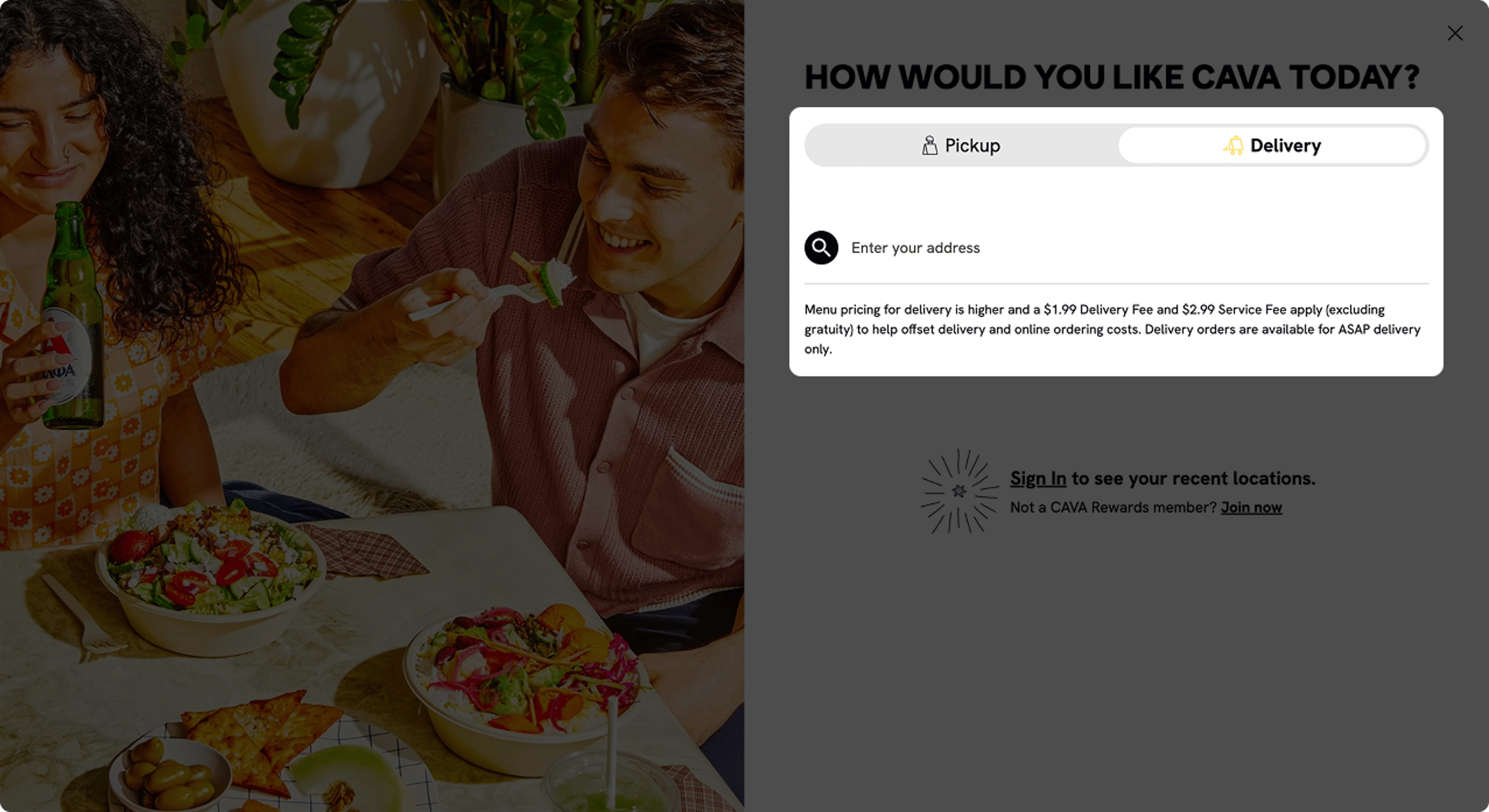
That’s the model in a single sentence: higher menu prices for delivery, a clear explanation of why, and full transparency up front. The direction of travel across the whole category is clearly toward pricing delivery into the experience rather than pretending it’s free.
Starbucks — the exception that proves the rule
Starbucks is the interesting counter-example. It doesn’t run its own first-party delivery — its delivery page routes you out to DoorDash, Uber Eats, or Grubhub, you can’t pay with the Starbucks app, and delivery orders don’t earn Rewards stars. Starbucks even notes that prices through those third parties “may be higher than posted in stores.”
In other words, because Starbucks handed delivery to the marketplaces, it also handed over the markup, the customer relationship, and the loyalty hook. That’s precisely the outcome the rest of these brands are working to avoid by owning delivery pricing on their own channels.
What this means for your restaurant
The pattern across all of these brands is consistent: the real cost of delivery gets built into the menu, and the loud, separate “delivery fee” at checkout gets minimized or eliminated. The brands that own this on their own app also own the customer and the loyalty relationship. The one that outsourced delivery gave all of that away.
The lesson from the big chains isn’t “hide your fees.” The Chick-fil-A, McDonald’s, and Cava notices all point to the winning version of this: price delivery into your menu, and be transparent that delivery pricing is a little different. You get a clean, surprise-free checkout, a direct channel that can actually compete with the marketplaces on perceived price, and a loyalty program that rewards ordering direct.
If billion-dollar brands with entire pricing teams have all landed in the same place, it’s worth asking whether your own delivery pricing is set up to compete — or set up to quietly push your best customers back onto third-party apps. For the full framework on how to set your markup, read the original article here.
Sources
Chipotle: higher menu pricing on delivery orders placed through Chipotle’s own app and website.
Chick-fil-A: higher delivery menu pricing and its app/website notice that delivery prices may be higher than in-store.
McDonald’s: McDelivery pricing and fees disclosure on mcdonalds.com; MyMcDonald’s Rewards earned on in-app McDelivery orders.
Starbucks: Starbucks Delivery information page (DoorDash/Uber Eats/Grubhub routing; third-party pricing notice; no Rewards stars on delivery).


